
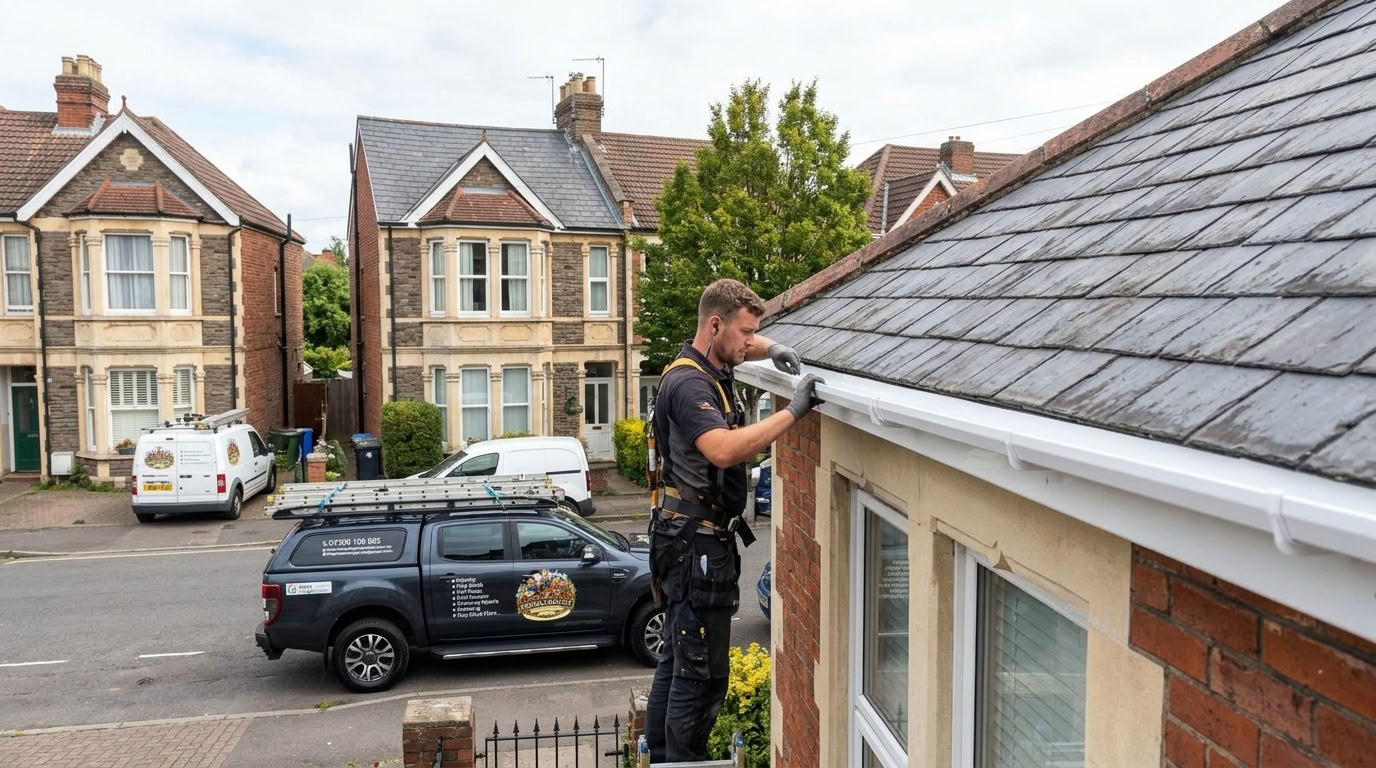
Gutter Repairs Bristol
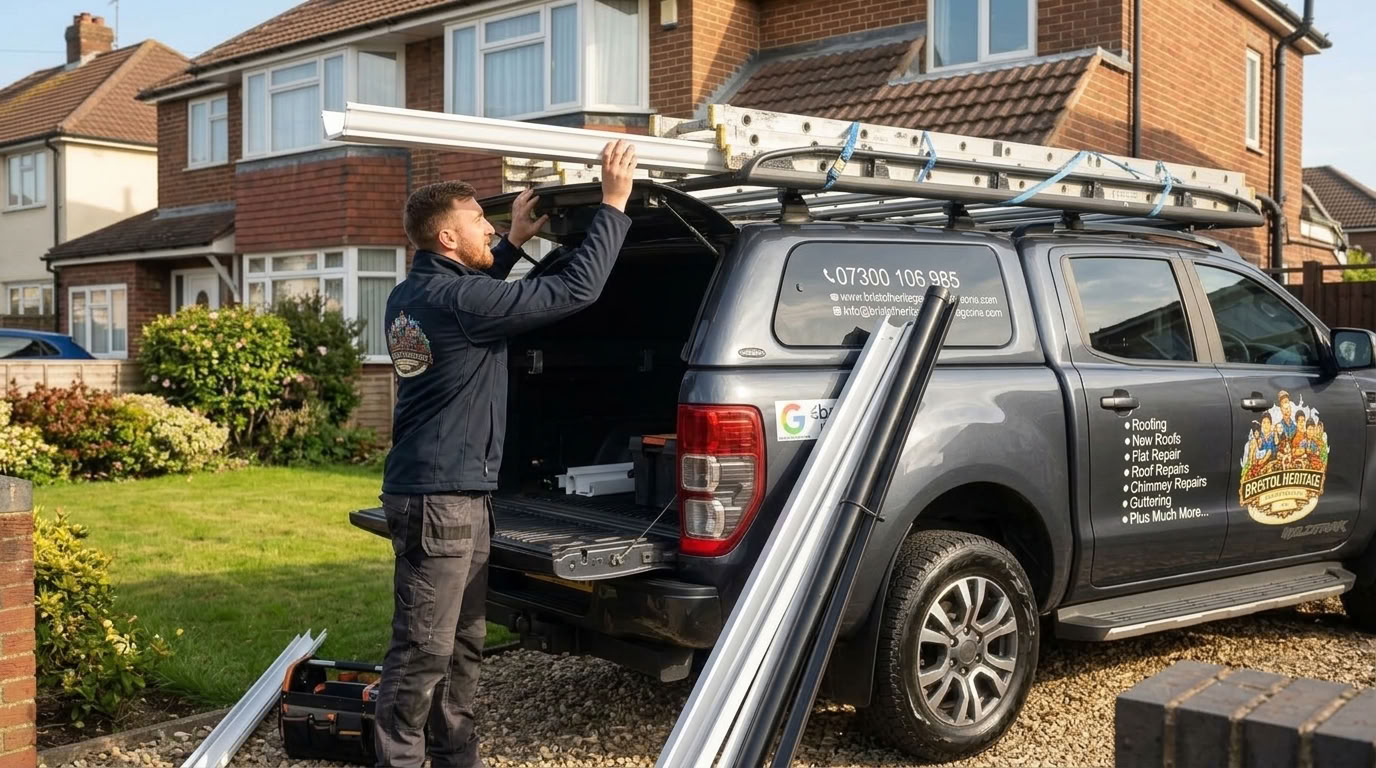
A gutter that drips, spills over in heavy rain, or hangs low at one end is usually a small fault with a simple fix. At Bristol Heritage Roofing, we trace the leak or overflow back to its cause first, then recommend the lightest fix that works: a clean, a targeted repair, or new guttering only when the old run is worn out.
That order saves money. The spot where water spills over is often a long way from the part that has failed. A blocked pipe at ground level or one loose bracket halfway along can make the whole run look broken.
Bristol is a wet city, getting around 860mm of rain a year against a UK average of roughly 670mm. That means gutters here work hard, and small faults show up fast on walls, fascia boards, and ceilings. With over 25 years of roofing experience, our team has seen most of the ways a Bristol gutter can go wrong.
What Gutter Problems Can Bristol Heritage Roofing Fix?
Our guttering services cover leaks, overflows, sagging runs, split joints, and blocked downpipes. Most of these come down to worn seals, brackets that have lost their grip, or debris packed into the pipe, and each one looks different from the ground once you know what to watch for.
Why Are Gutters Leaking or Overflowing?
A leak and an overflow are two different problems, even though both leave water where it shouldn't be.
A leak drips from one spot, usually a joint. You'll often see it dripping long after the rain stops. Look for dark or green streaks running down the brickwork right below that point.
An overflow is water spilling over the front edge in a sheet during heavy rain. This points to one of these causes:
- Leaves, moss, or grit filling the gutter
- A blocked downpipe backing water up
- A section that has lost its slope and holds water
- A gutter too small for the roof area it drains
A tip from the jobs we see: if you've got a damp patch high on an inside wall, check the gutter above it before paying for damp treatment. Water spilling down the outside wall for months soaks through to the plaster, and fixing the gutter stops it at the source.
What Causes Sagging Gutters and Failed Joints?
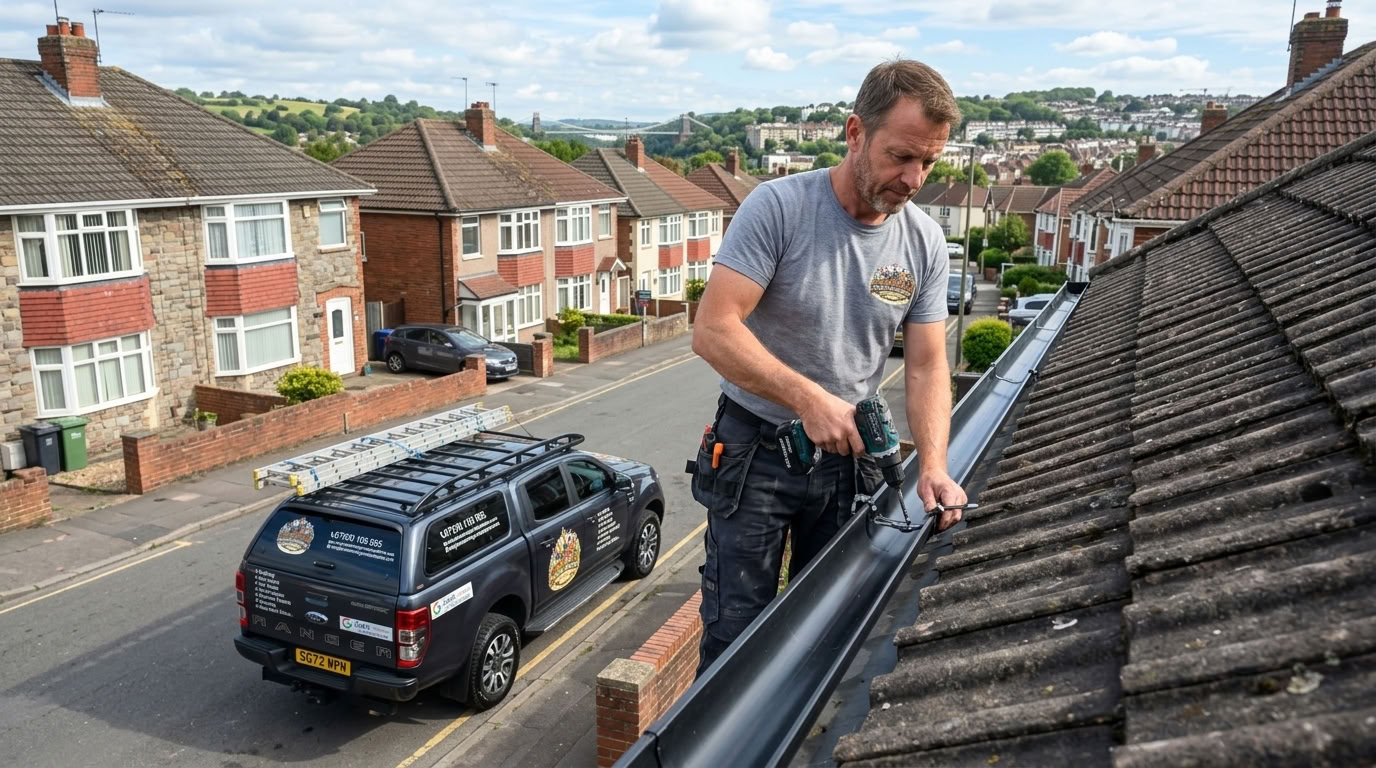
Sagging almost always comes from the brackets. Over time, a bracket screw works loose, or the timber fascia board behind it goes soft and can't hold the fixing. Once one bracket drops, the gutter tilts the wrong way and water sits in the dip.
That standing water adds weight. It also grows moss, which makes the sag worse over a few winters.
Failed joints are a separate job. Gutter sections clip together with rubber seals, and those seals turn brittle with age and weather. When they harden, water seeps through, and the joint can slip out of line. Signs to look for:
-
Drips from the same joint every time it rains
-
Creaking or squeaking in strong wind
-
A section that looks twisted or pulled apart
When we repair a joint, we reseal or replace the connector. For a dropped bracket, we check the fascia first. If the timber is sound, the bracket is re-fixed and the fall is reset so water runs toward the outlet again.
Could a Blocked Downpipe Be the Real Problem?
Yes, and it's one of the most common mix-ups we find. The bend at the bottom of the downpipe, called the shoe, is where leaves and silt pile up. When it blocks, water backs up the full height of the pipe and spills out of the gutter at the top.
From the ground, that looks like a gutter fault. The fix happens at ground level.
You can check this yourself. During rain, watch the downpipe. If the gutter near the outlet is overflowing but little water comes out at the bottom, the pipe is blocked. Our downspout maintenance covers clearing and checking pipes so water runs away from your walls and foundations.
Should You Clean, Repair, or Replace Your Gutters?
Start with the cheapest option that solves the problem, and only move up if it fails. Cleaning handles blockages, repair handles one or two worn parts, and replacement makes sense when faults keep appearing along the whole run.
When Is Gutter Cleaning Enough?
Gutter cleaning is enough when the gutter is sound but full. If the overflow started after autumn leaves came down, or you can see plants growing along the edge, a clean will likely sort it.
Signs cleaning will do the job:
- The gutter is straight and firmly fixed
- Joints are dry between showers
- Overflow happens along the full run, in heavy rain only
A clean twice a year keeps most gutters trouble-free: once in late autumn after the leaves drop, and again in spring to clear moss and grit. Homes near big street trees may need an extra visit. When we clean, we also look at joints and brackets, so small faults get spotted early.
When Do uPVC Gutters Need Repair or Replacement?
uPVC gutters need a repair when the fault is in one place. A single leaky joint, one cracked section, or a loose bracket can be fixed without touching the rest.
They need replacement when problems keep coming back. Here's how we weigh it up:
|
What you see |
Our usual advice |
|---|---|
|
One dripping joint |
Reseal or new connector |
|
One sagging section, solid fascia |
Re-fix bracket, reset slope |
|
Several joints leaking at once |
Consider gutter replacement |
|
Plastic faded, brittle, or cracking |
Replace the run |
|
Soft or rotten fascia behind brackets |
Fix fascia with the gutter |
If you're resealing a third joint on an old run, the next ones won't be far behind. At that point, new guttering costs less in the long run than repeat call-outs.
Older Bristol homes may still have cast iron. Sound cast iron with a few bad joints is worth repairing. Cast iron rusted through in several places is usually better replaced.
What Happens During a New Gutter Installation?
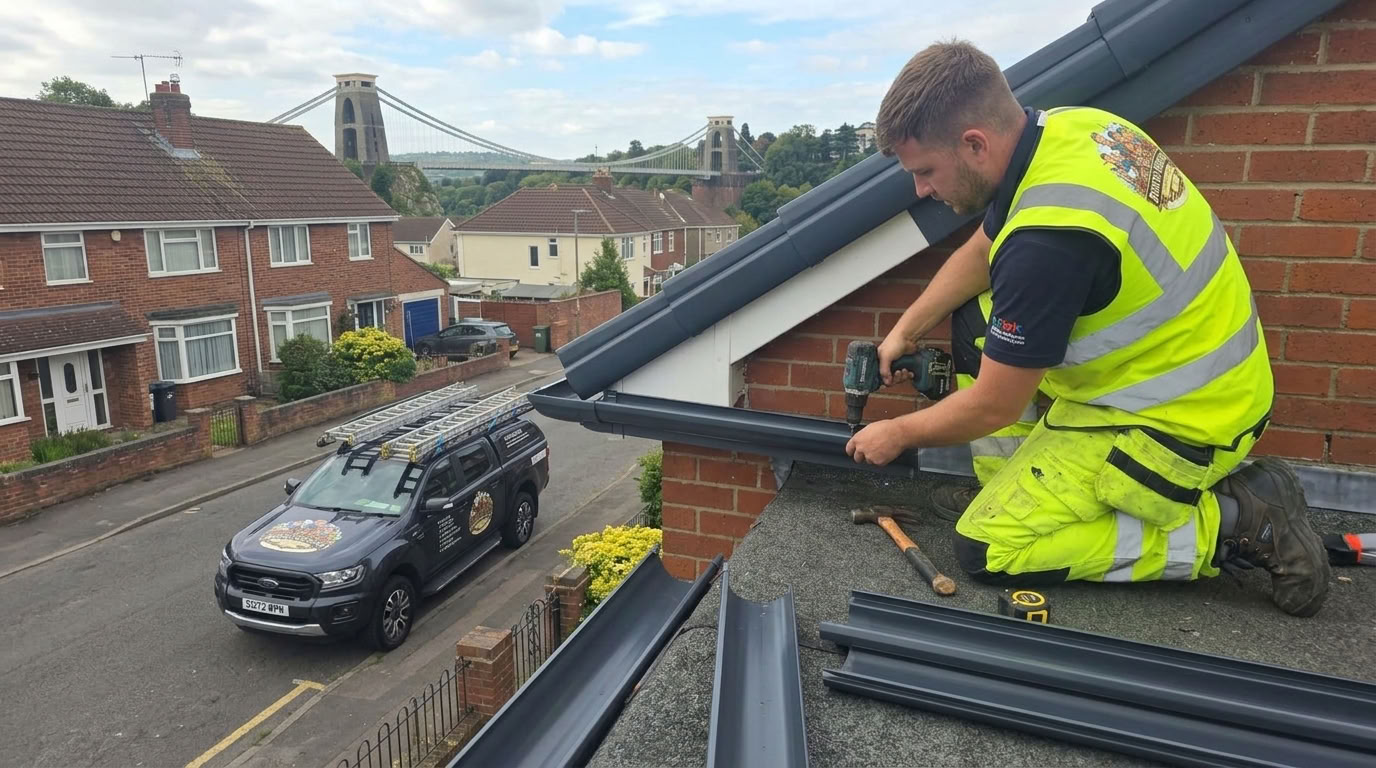
A gutter installation starts with measuring the roof and choosing the right size and profile for the rain it has to carry. We then check the fascia board, because new brackets need solid timber to grip.
The main steps:
- Remove the old gutter and downpipes
- Repair or replace any soft fascia
- Fix new brackets to a steady fall toward the outlet
- Fit the gutter sections, joints, and outlets
- Connect downpipes and check they drain freely
- Test the run with water before we leave
Getting the slope right is what stops future pooling. If your downpipes are the same age as the gutter, replacing them at the same time is worth thinking about, since the labour is already there.
How Can You Request a Free Inspection?
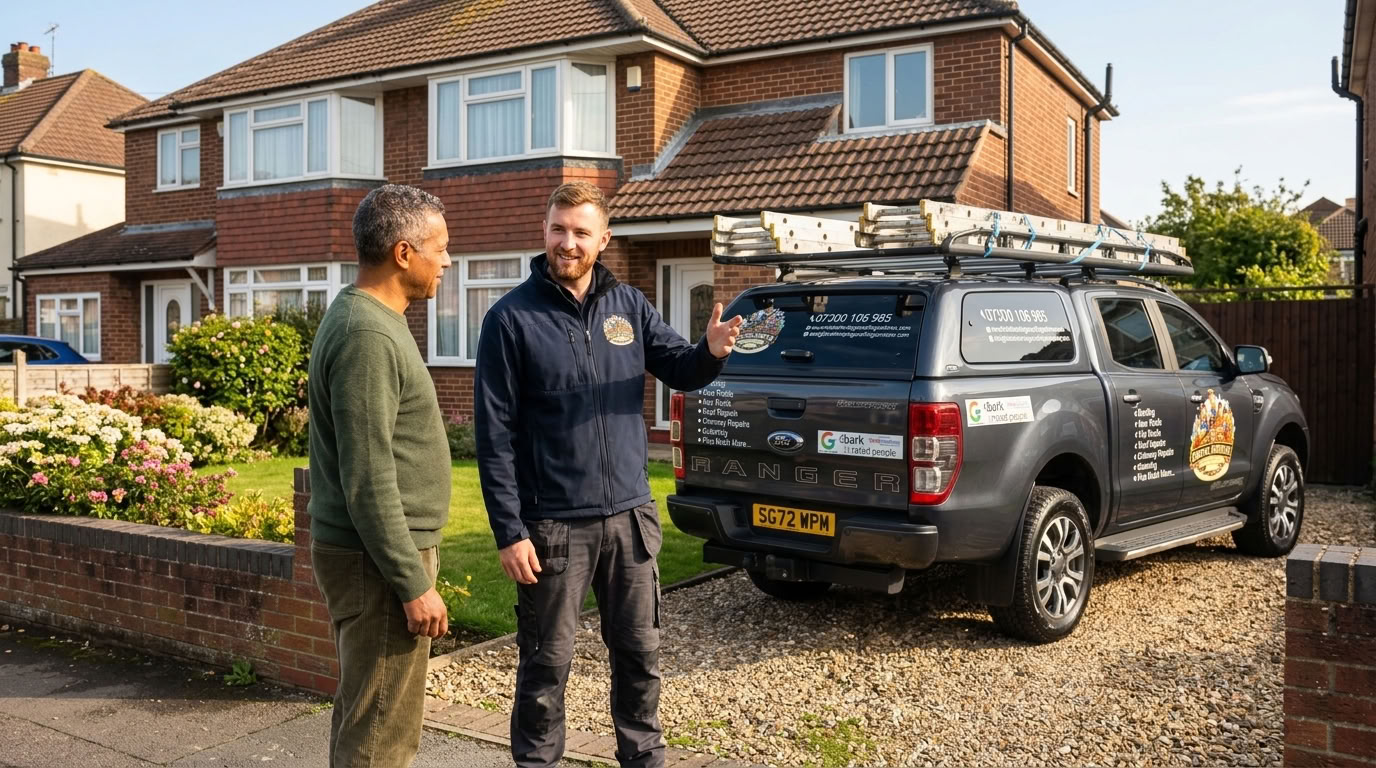
Ask us for a free inspection and we'll come out, look at the whole system, and show you what's wrong before we quote. You'll know whether it's a clean, a repair, or new guttering, and why.
To help us, note down:
- Where the water spills or drips
- Whether it happens in all rain or only heavy rain
- Any damp patches inside and where they are
- Photos, if you can take them safely from the ground
If you live in Bedminster or nearby, get in touch and we'll confirm whether we can cover your street. Please don't climb a ladder to check; that's our job.
Getting Your Gutters Working Again
Most gutter trouble in Bristol comes down to a leaking joint, a dropped bracket, or a blocked downpipe, and each has its own simple fix. Cleaning sorts blockages, targeted repairs handle one-off faults, and replacement is for runs that are worn out end to end.
If you can't tell which one you've got, Get a Free Inspection from us. We'll find the cause, show you the evidence, and recommend the smallest job that stops the water.
Our Gutter Repairs Bristol Work
Our Process
Why Choose Us
- Over 25 years of experience
- Fully insured and qualified
- Free no-obligation quotes
- All work guaranteed
- Family-run local business
- Emergency callout available